 ACRE LABACRE LAB
Research

Research Overview
Our mission is to pioneer sustainable catalysis by combining atomic precision and data-driven innovation.
Our research focuses on three areas: the chemical upcycling of plastic waste, the precise synthesis of single-atom catalysts, and the design of heterogeneous catalysts via computer driven technologies. Through the integration of machine learning and fundamental reaction kinetics, we aim to provide transformative catalytic solutions that are essential for environmental stewardship and energy efficiency.
Catalytic Upcycling of Plastic Waste
We are advancing catalytic processes for the chemical upcycling of plastic waste, addressing one of the most pressing environmental challenges of our time. With plastic-to-fuel conversion increasingly gaining attention as a sustainable pathway to high-value energy carriers like gasoline, diesel, and aviation fuel, our innovations contribute to the development of a circular carbon economy. Our focus is on developing catalysts with exceptional selectivity and activity by inducing strong metal-support interactions and precisely tailoring metal structures, such as Ru-based systems modified with triethanolamine (TEA). This research is particularly promising for elucidating the fundamental mechanisms of hydrogenolysis and hydrocracking, bridging the gap between basic surface science and applied environmental solutions.


Related articles
[1] “Unraveling the role of water in mechanism changes for economically viable catalytic plastic upcycling”, Nature Communications, 15,
10239 (2024) – Link
[2] “Tandem Catalysis for Plastic Depolymerization: In Situ Hydrogen Generation via Methanol Aqueous Phase Reforming for Sustainable
Polyethylene Hydrogenolysis”, Angewandte Chemie International Edition, e202420748 (2025) – Link
[3] “Sustainable polyolefin upcycling using liquid organic hydrogen carrier based hydrogen delivery and hydrocracking”, Nature
Communications, 17, 918 (2026) – Link
Carbon Capture and Utilization (CCU)
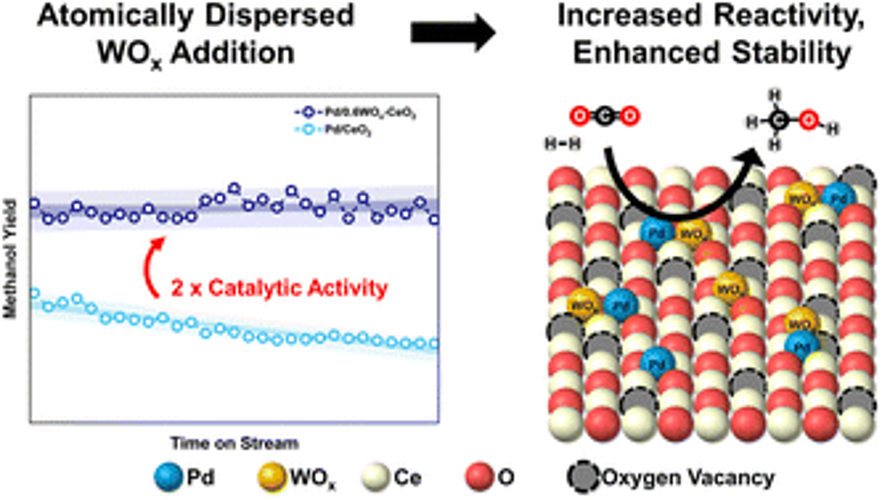
We advance innovative catalytic solutions for carbon capture and utilization (CCU) and broader environmental challenges to drive a low-carbon circular economy. While our core expertise highlights key CO2 conversion pathways—such as CO2 hydrogenation and the dry reforming of methane (DRM)—our catalytic framework is highly expandable. By engineering metal-support interactions and optimizing active sites, we overcome critical issues like catalyst deactivation and coking. Ultimately, we bridge fundamental molecular-level insights with the practical design of scalable catalysts to tackle a wide spectrum of urgent environmental and energy crises.

Related articles
[1] “Role of phase in NiMgAl mixed oxide catalysts for CO2 dry methane reforming (DRM)”, Catalysis Today, 411, 113894 (2023) – Link
[2] “Engineering Oxygen Vacancies with Atomically Dispersed WOx: A Strategy for Superior CO2 Hydrogenation Performance and Stability
on Pd/CeO2″, Journal of Materials Chemistry A, Advance Article (2026) – Link
Single Atom Catalysis
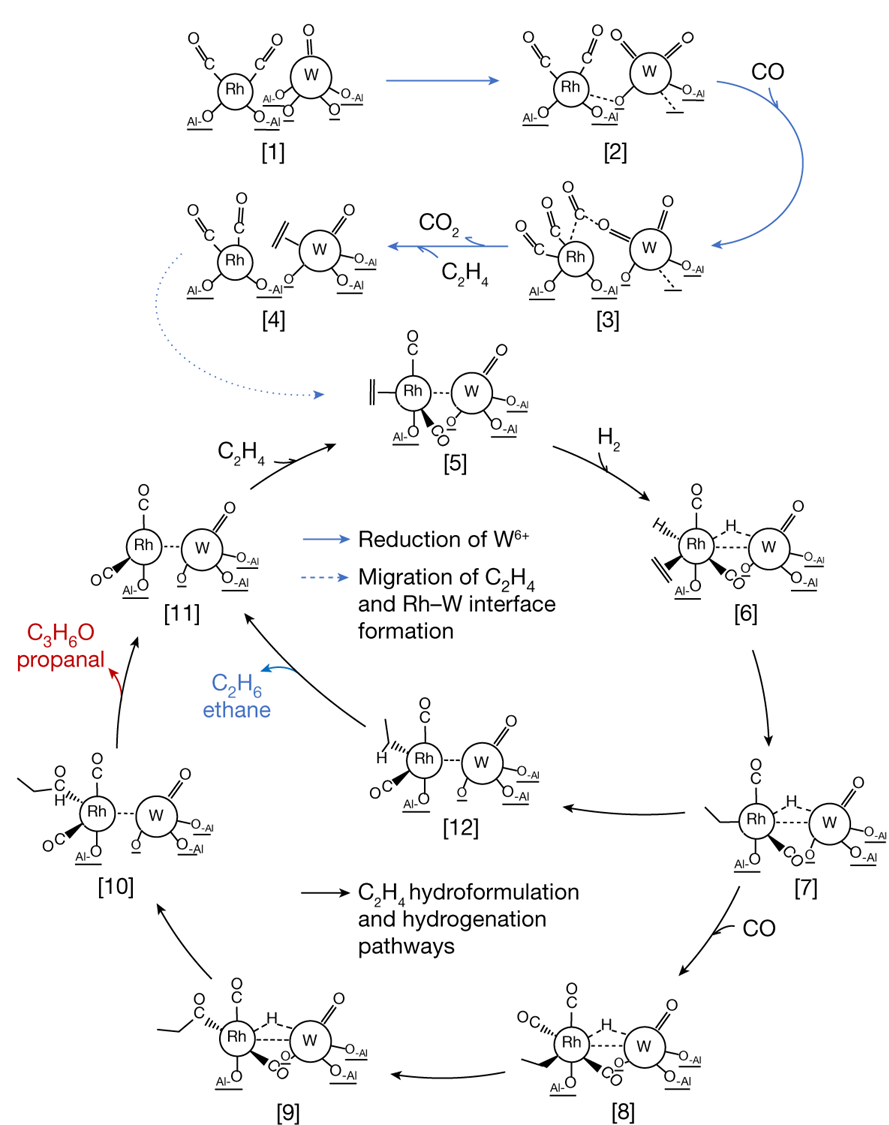
We are advancing the synthesis of single-atom catalysts (SACs), addressing the growing need for highly efficient and atom-economical chemical transformations. With SACs increasingly gaining attention for their maximum atom utilization and unique electronic properties, our innovations contribute to the fundamental design of next-generation catalytic materials. Our focus is on tailoring the electronic structure of isolated metal sites by precisely controlling their coordination environments and metal-support interactions. This approach is particularly promising for revealing novel reaction mechanisms and lowering activation energies, effectively bridging atomic-scale precision with industrial-scale catalytic performance.

Related articles
[1] “Bifunctional hydroformylation on heterogeneous Rh-WOx pair site catalysts”, Nature, 609, 287-292 (2022) – Link
[2] “Enhanced Stability of Atomically Dispersed Pd Catalysts via Ionic Liquid Layer Deposition for Selective Acetylene Hydrogenation to
Ethylene in Excess Ethylene”, ChemCatChem, 15, 6, e202201428 (2023) – Link
Machine Learning for Heterogeneous Catalyst Design
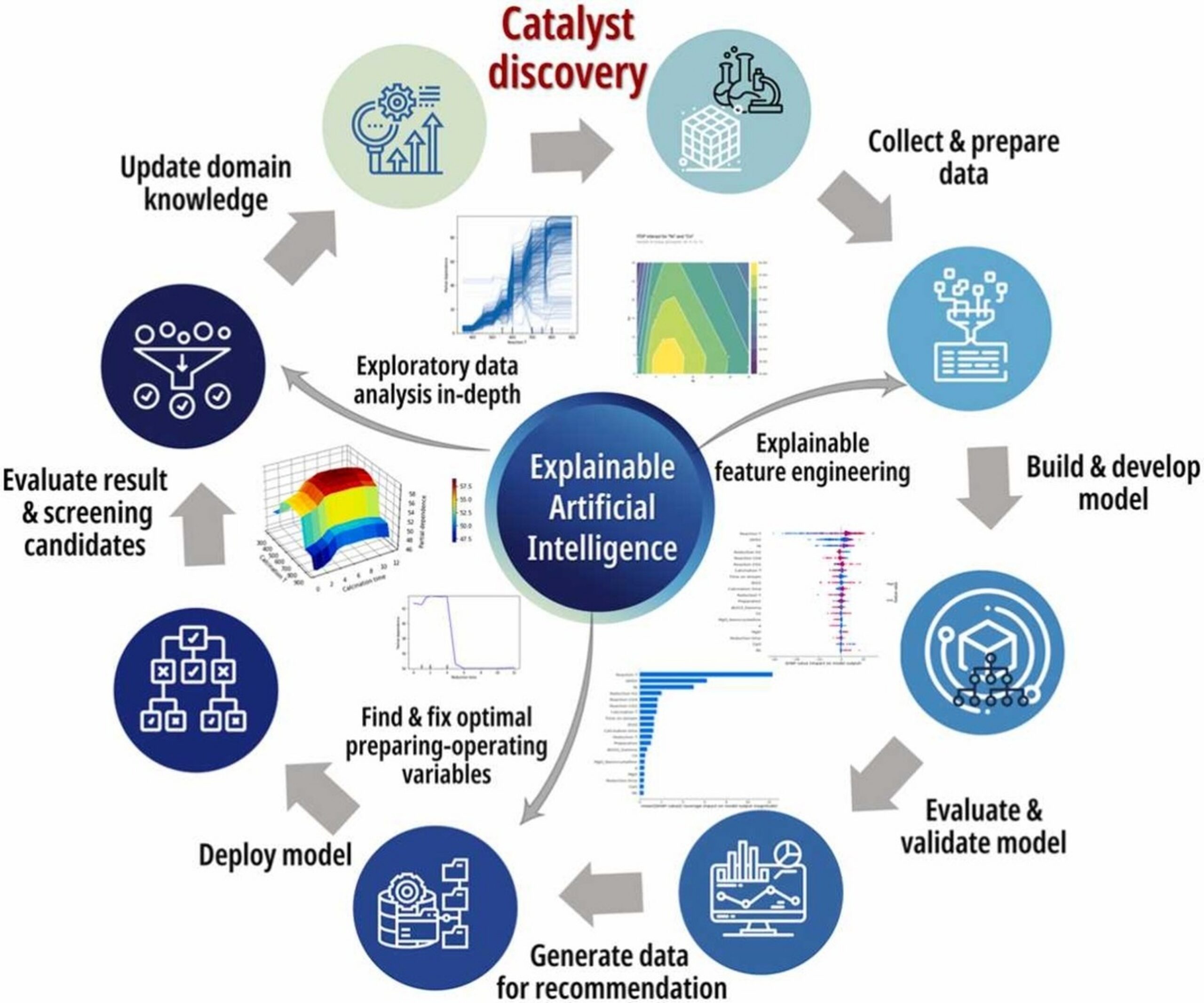
We are advancing data-driven strategies for heterogeneous catalyst design, addressing the inherent inefficiencies of conventional trial-and-error methodologies. With machine learning (ML) increasingly gaining attention as a transformative tool in the era of big data, our innovations contribute to the rapid and precise prediction of catalytic performance. Our focus is on leveraging extensive experimental datasets to develop predictive models that bypass labor-intensive iterative testing. This integration of ML with fundamental kinetic studies is particularly promising for moving beyond simple activity prediction, enabling a deeper, comprehensive understanding of complex catalytic mechanisms and operating principles.

Related articles
[1] “Interpretable machine learning framework for catalyst performance prediction and validation with dry reforming of methane”, Applied
Catalysis B: Environmental, 343, 123454 (2024) – Link
[2] “Accelerating active catalyst discovery: a probabilistic prediction-based screening methodology with applications in dry reforming of
methane”, Journal of Materials Chemistry A, 12, 1629-1641 (2024) – Link
[3] “Hybrid Quantum Neural Network Model with Catalyst Experimental Validation: Application for the Dry Reforming of Methane”, ACS
Sustainable Chemistry & Engineering, 12, 10, 4121–4131 (2024) – Link
Contact info
Contact: +82-2-3290-3291
Email: insooro@korea.ac.kr
Location
Advanced Catalysis and Reaction Engineering Laboratory
Department of Chemical and Biological Engineering
Korea University
145 Anam-ro, Seongbuk-gu, Seoul 02841, Korea

Department of Chemical and Biological Engineering
Copyright By ACREL All Rights Reserved